Rituals, explained
Jaimala
Also called Varmala
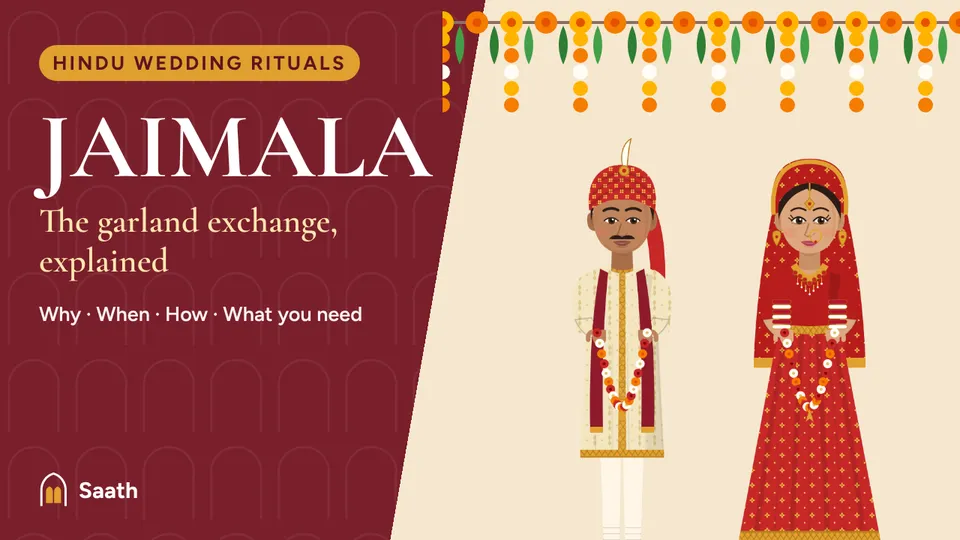
Jaimala, also called Varmala. The moment the bride and groom exchange garlands.
Why it's performed
- Choosing each otherBy placing a garland around each other's neck, the bride and groom accept each other as partners, in front of both families and all the guests. Flowers stand for respect, joy and a fresh beginning.
- Sita's swayamvarIn the Ramayana, Sita placed a garland around Lord Rama's neck at her swayamvar, choosing him as her husband. The jaimala remembers that moment of choice.
When it happens
- On the wedding dayJaimala takes place on the wedding day, soon after the baraat arrives and the families meet, and before the pheras.
How it's performed
- 1Face to faceThe groom waits on a decorated stage. The bride arrives, often escorted by her brothers or cousins, and they stand face to face, each holding a garland.
- 2The garland exchangeIn many families the bride garlands the groom first, and then he garlands her. Guests shower flower petals and cheer.
- 3A playful momentIt's often playful: friends lift the groom, or the bride, so the other has to stretch to reach!
What you'll need
- Two varmala garlandsFind on Amazon: Two varmala garlands (opens Amazon in a new tab)
- A cool place to keep them fresh
- A stage with steps
- Flower petals for guestsFind on Amazon: Flower petals for guests (opens Amazon in a new tab)
- Music for the entry
As an Amazon Associate we earn from qualifying purchases.
A general guide. Rituals differ by region and by each family's beliefs, so ask your elders and pandit how your family does it. Report an issue with this ritual
Plan your Jaimala with your family
The ritual, its item list and the vendors it needs are added to your plan, and everyone can see who's bringing what.
Start planning, free