Rituals, explained
Baraat
The groom's procession
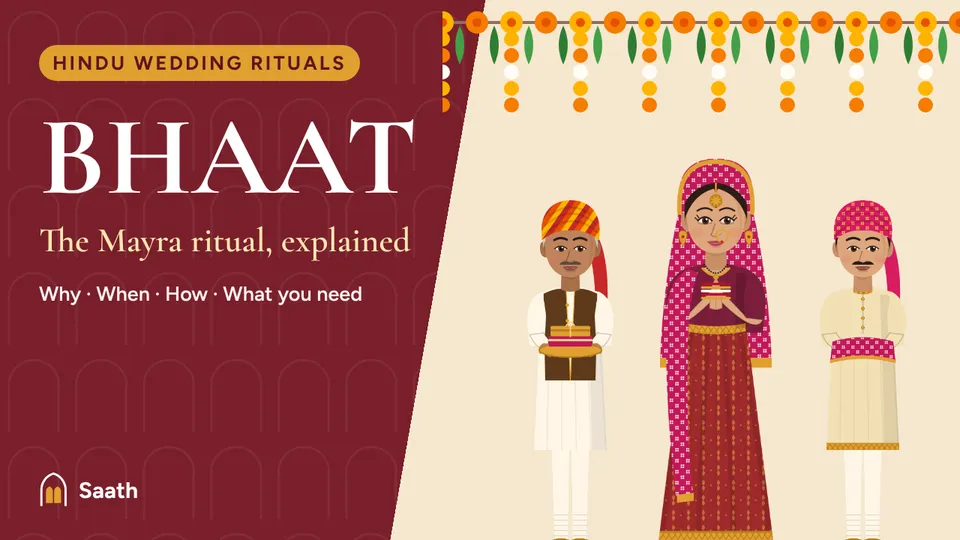
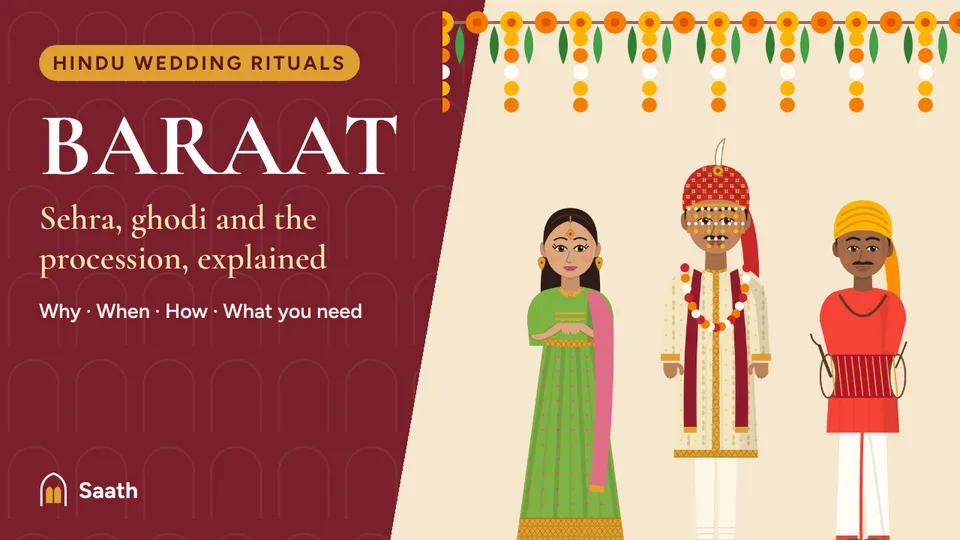
Baraat. The groom's joyful procession to his wedding, with music, dancing and a lot of noise!
Why it's performed
- Going to bring the bride homeThe groom sets out with his whole family and friends to the bride's home or venue, to marry her and bring her home. The baraat announces the wedding to everyone along the way, and shows how happily his family welcomes this new bond.
When it happens
- Evening of the wedding dayThe baraat sets out on the wedding day, usually in the evening, and reaches the venue before the milni and the jaimala.
How it's performed
- 1Tying the sehraFirst, at home, the sehra is tied over the groom's turban. This veil of flowers or pearls protects him from the evil eye. In Punjabi and Sikh families this is the sehrabandi, often done after a short prayer.
- 2Ghodi chadnaThen the groom mounts a decorated mare. His sisters feed her chana and his sister-in-law puts kajal in his eyes. Marwari and Agrawal families call this ghudchadi or nikasi.
- 3Dancing all the wayThe band and the dhol lead the way, and family and friends dance in front of the groom. Some grooms arrive in a decorated car instead. Gujarati families call the procession the jaan.
- 4A grand welcomeAt the venue, the bride's family welcomes the baraat at the entrance, often with an aarti and tilak for the groom. Then the two families meet in the milni.
What you'll need
- Sehra, safas and the kalgiFind on Amazon: Sehra, safas and the kalgi (opens Amazon in a new tab)
- Mare or decorated car
- Band or dhol, and a route plan
- Water and a time to reach the venue
As an Amazon Associate we earn from qualifying purchases.
A general guide. Rituals differ by region and by each family's beliefs, so ask your elders and pandit how your family does it. Report an issue with this ritual
Plan your Baraat with your family
The ritual, its item list and the vendors it needs are added to your plan, and everyone can see who's bringing what.
Start planning, free